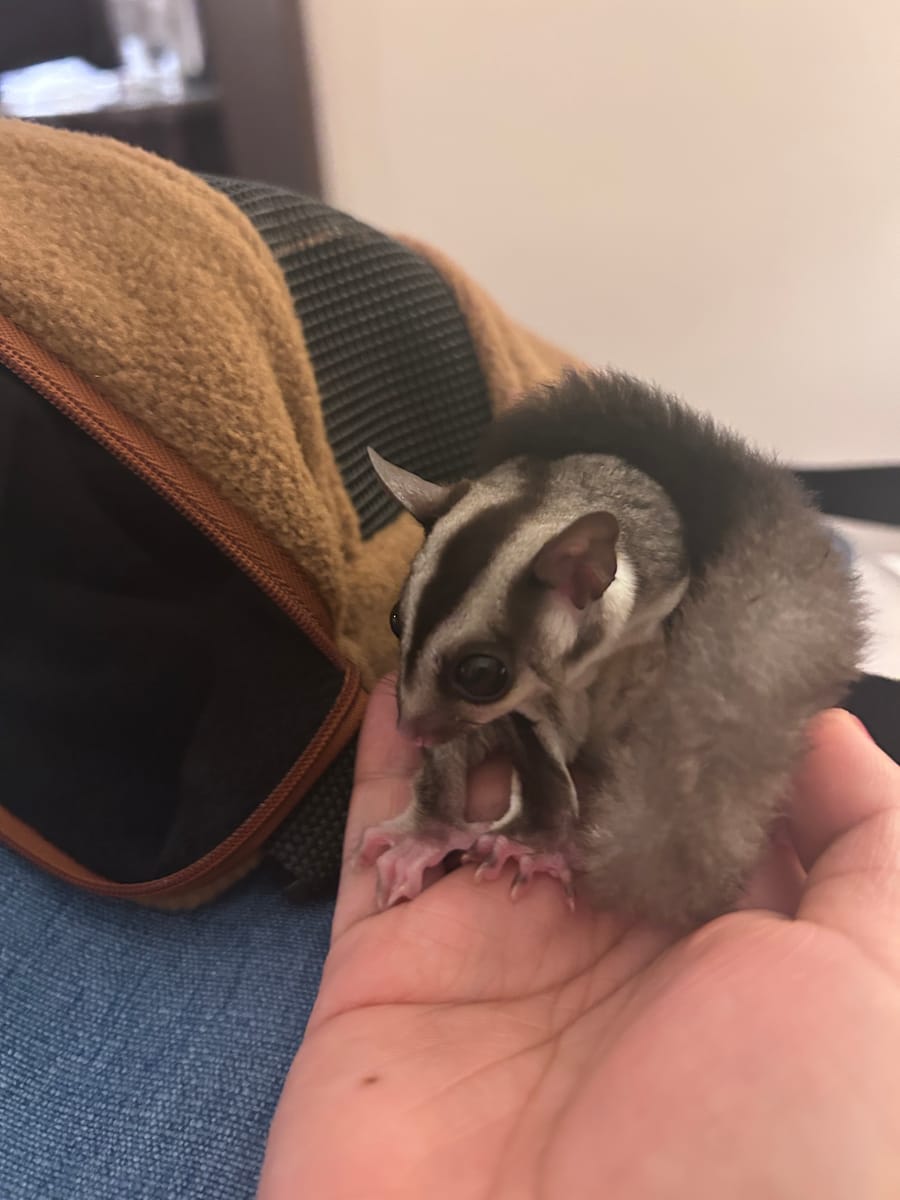
What Do Sugar Gliders Eat? A Safe Diet Guide
If a sugar glider gets sick, the cause is the food bowl more often than anything else, and the most common illness of all is one a good diet prevents completely. Get the feeding right and you have a healthy animal for ten to fifteen years. Get it wrong, even with the best intentions, and you are heading toward a slow, hidden disease that can leave a glider paralysed at the bottom of its cage with almost no warning. What sugar gliders eat is not complicated, but it is unforgiving, so this is the page to read twice.
The single most important thing to understand
In the wild, sugar gliders are omnivores that take tree sap, nectar, pollen, insects, and a little fruit. The instinct people get wrong is to feed mostly fruit, because gliders love it and will happily gorge on it. A fruit-led diet is the leading cause of the disease that harms pet gliders most.
Here is why. Sugar gliders need roughly twice as much calcium as phosphorus in their diet, a ratio of about 2 to 1. Fruit, insects, and meat are nearly all the other way around: high in phosphorus, low in calcium. When the diet runs short on calcium for long enough, the glider’s body starts pulling calcium out of its own bones to compensate. Over months the bones weaken, and the result is metabolic bone disease, also called hind-leg paralysis. The cruel part is that a glider on a poor diet can look completely normal right up until the day it cannot use its back legs. By then the damage is done.
This is preventable, completely, by feeding a balanced diet instead of a fruit bowl.
The shape of a correct diet
A healthy glider diet has three parts, in this order of importance.
1. A complete staple diet (the foundation). This is the bulk of what your glider eats, and it is the part that keeps the calcium and phosphorus in balance. Do not improvise it. Choose one researched, proven recipe and follow it exactly. The diets glider keepers and exotic vets trust are well known by name: BML (Bourbon’s Modified Leadbeater’s), the HPW diets (High Protein Wombaroo), TPG (The Pet Glider Fresh Diet), and Critter Love Complete. Each has a precise recipe. The mistake is mixing and matching them or substituting freely, which breaks the balance the recipe was built to hold.
2. A small amount of fresh fruit and vegetables. This is a garnish, not the meal, ideally around a tenth of the diet. Most proven diets give you a specific approved produce list to feed alongside the staple. Variety is good within that list, but quantity is not. The fruit your glider begs for is exactly the part to keep modest.
3. Calcium-dusted insects, in moderation. Insects are a natural protein source gliders enjoy, but raw insects are high in phosphorus, so they should be gut-loaded (fed well themselves) and dusted with a calcium supplement before feeding. A few per day is plenty. Cooked egg and small amounts of cooked lean poultry can fill the protein role too. Insects fed without calcium, as a free-for-all, push the diet in exactly the wrong direction.
A useful way to remember it: the balanced staple keeps the animal healthy, the insects keep it interested, and the fruit keeps it happy. All three matter, but only in that proportion.
A note on apples, eggs, and crickets
Apples, boiled eggs, and crickets are all foods a sugar glider can eat, and gliders love apple in particular. The danger is not any one of these foods. It is feeding them as the whole diet. Apple is a higher-phosphorus fruit best kept to small portions, never the staple. Boiled egg is good protein but not a complete diet on its own. Crickets are fine as an occasional protein, dusted with calcium, though some keepers prefer other feeders. On their own, as a daily menu, this trio is the classic recipe for the calcium problem above. Built on top of a proper staple, they are welcome additions. The difference is the foundation underneath them.
Foods that are dangerous
Keep these away from a glider entirely:
- Chocolate and anything with caffeine, including coffee and tea
- Onion and garlic
- Dairy, which gliders do not digest well
- Raw or undercooked meat
- Fruit seeds and pits, including apple seeds and cherry pits
- Wild-caught insects, or any bug that may have met pesticide
- Anything processed, salted, or sugared for people
When unsure about a new food, the safe default is to leave it out until you have checked it against a reliable glider diet source.
Feeding in the Philippine context
Keeping gliders here gives you easy access to fresh tropical fruit, which is a genuine advantage, as long as fruit stays the small part of the bowl. Wash all produce well, since a glider’s small body has little tolerance for pesticide residue. Source feeder insects from a feeder breeder rather than catching your own, for the same reason. Feed in the evening, when the glider naturally wakes to forage, and remove uneaten fresh food in the morning before it spoils in the heat.
Frequently asked questions
What do sugar gliders eat as a staple? A complete, researched staple diet such as BML, an HPW diet, TPG, or Critter Love, fed as the foundation, with a small amount of fruit and vegetables and some calcium-dusted insects alongside.
Can sugar gliders live on fruit? No. A fruit-led diet causes a calcium imbalance that leads to metabolic bone disease over time. Fruit should be roughly a tenth of the diet, not the bulk of it.
Why is calcium so important for sugar gliders? Gliders need about twice as much calcium as phosphorus. Without it, their bodies leach calcium from their bones, causing metabolic bone disease and hind-leg paralysis. Insects should be dusted with calcium for this reason.
Can sugar gliders eat apples and eggs? Yes, in moderation and on top of a balanced staple. Neither is a complete diet alone, and apple seeds must be removed.
Ready to feed one properly?
A glider is only as healthy as its diet. If you are ready to feed one the right way, see who is available.
Call to Reserve → +63 945 995 0591 Call or text to reserve. From ₱13,000, DENR papers included. In-person delivery available.