Sugar Glider Cage and Enclosure Setup
The most common setup mistake is buying a cage that is wide and short instead of tall. It is an easy error, because most pet enclosures are built for animals that live on the ground, and a glider does not. A glider climbs to a high point and glides down, so vertical space is the one thing it cannot do without. Set the enclosure up correctly before your joey arrives and you spare yourself a second purchase, plus the stress of rehousing a new animal. Here is what actually matters, drawn from exotic-vet guidance rather than guesswork.
Size and shape
Prioritise height. As a working minimum for a bonded pair, exotic-vet sources point to roughly 24 inches deep by 36 inches wide by 36 inches tall, which is about 61 by 91 by 91 centimetres, and bigger is always better. The cage needs enough vertical room for a glider to climb high and make short glides, and enough clearance above the sleeping pouch that a glider’s gliding membrane does not rub the roof.
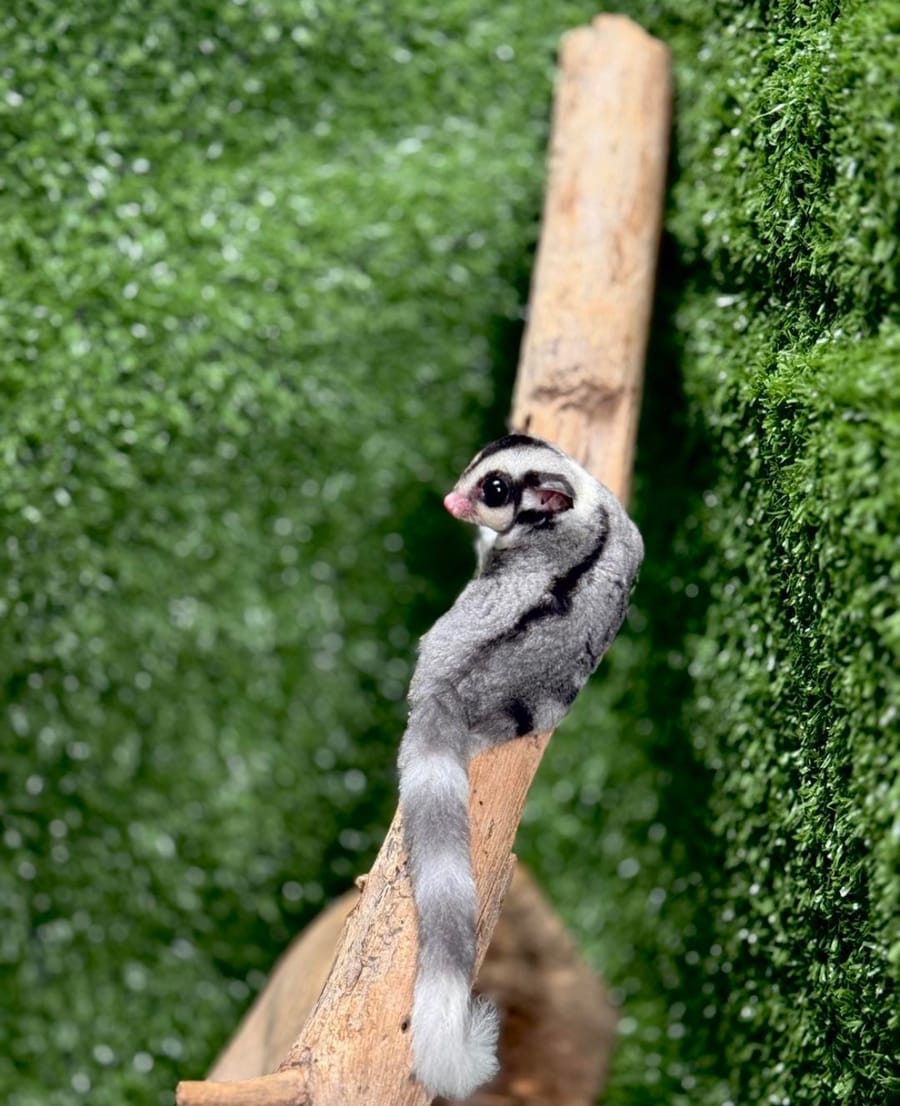
Inside, build the space in three dimensions: branches, ropes, and platforms set at angles and different heights, so the glider has routes up and landing spots coming down. An empty tall box is not enough. The climb itself is the enrichment.
Bar spacing, the detail that keeps them in
Bar spacing must be no wider than half an inch, about 1.3 centimetres. A glider is small, flexible, and a determined escape artist, and a young one can slip through anything wider, or get stuck trying. This is the first spec to check, because a cage that fails it cannot be fixed with accessories. Secure the latches too, since gliders learn to open loose doors.
Cage material matters more than people expect
Choose powder-coated or PVC-coated wire. Avoid galvanised wire, which can cause zinc poisoning if a glider chews or licks it. This is a genuine health point, not a finish preference.
The wheel that will not hurt them
Gliders love to run, but the wrong wheel injures them. Avoid any wheel with a wire mesh surface or an open central axle with spokes, both of which can catch a tail or a foot. Choose a solid-surface running wheel made for gliders, with no central axle. It is one of the few accessories worth buying new and buying right.
Sleeping and bedding
Gliders sleep through the day and want somewhere dark and snug, so hang at least one fabric sleeping pouch high in the cage, plus a spare. A pouch you can carry doubles as a bonding tool. For the cage floor, washable fleece liners or plain paper are clean and safe. Avoid cedar and pine shavings, whose oils are not good for a glider’s airways, and avoid loose cotton-style filling that can catch a claw or be swallowed.
Temperature, and why the Philippines suits them
Sugar gliders are tropical animals, and this is one place the local climate works in your favour. They are comfortable in the warm range most Philippine homes sit at naturally, roughly 24 to 29 degrees Celsius, and they tolerate a bit either side of that. The risk here is not heat, it is cold from air-conditioning. Below about 18 degrees a glider can slip into torpor, a sluggish, energy-conserving state that is dangerous in a home where it has no colony to warm against. So keep the cage out of the direct path of an aircon unit and away from cold drafts at night.
One firm rule from the vet sources: never use a heat lamp, heat rock, or heat pad. Gliders cannot regulate against them well and they cause burns and overheating. In the Philippine climate you will almost never need added heat anyway.
Where to put the cage
Position matters as much as the cage itself. Gliders are social and settle better where they can hear and see the household, but they sleep by day, so choose a room that is calm during daylight, out of direct sun, and away from kitchen fumes and constant noise. A frequently used living area, out of the sun and clear of the aircon’s cold path, is close to ideal. Raising the cage toward eye level helps a new glider feel secure rather than loomed over.
A word on branches
If you add natural branches, avoid toxic woods: cherry, peach, almond, apricot, and black walnut. Untreated, pesticide-free apple or citrus wood is safe. Bake any outdoor branch at low heat for half an hour first to kill microbes.
Why this is a two-glider setup
It is worth saying plainly, because it shapes everything above: sugar gliders are colony animals, and exotic-mammal vets treat a bonded pair as the responsible standard rather than a nice extra. A glider kept alone, however much attention you give it, often declines into stress behaviours like overgrooming and withdrawal. Plan the enclosure for at least two from the start, with a pouch and feeding station each. We cover the reasoning in full in Are Sugar Gliders Good Pets?.
Frequently asked questions
How big should a sugar glider cage be? For a bonded pair, aim for at least about 61 by 91 by 91 centimetres, prioritising height. Bigger is always better, and a tall cage beats a wide one.
What bar spacing is safe? No wider than half an inch, around 1.3 centimetres, so a glider cannot slip through or get stuck.
What temperature do sugar gliders need? Roughly 24 to 29 degrees Celsius. Philippine room temperature usually suits them; the thing to manage is air-conditioning, not heat. Never use heat lamps or pads.
Can sugar gliders use a hamster wheel? No. Wire or spoked wheels can injure the tail or feet. Use a solid-surface wheel made for gliders.
Cage ready? So is your joey
Set the enclosure up first, then bring the animals to it. When you are ready, see who is available.
Call to Reserve → +63 945 995 0591 Call or text to reserve. From ₱13,000, DENR papers included. In-person delivery available.