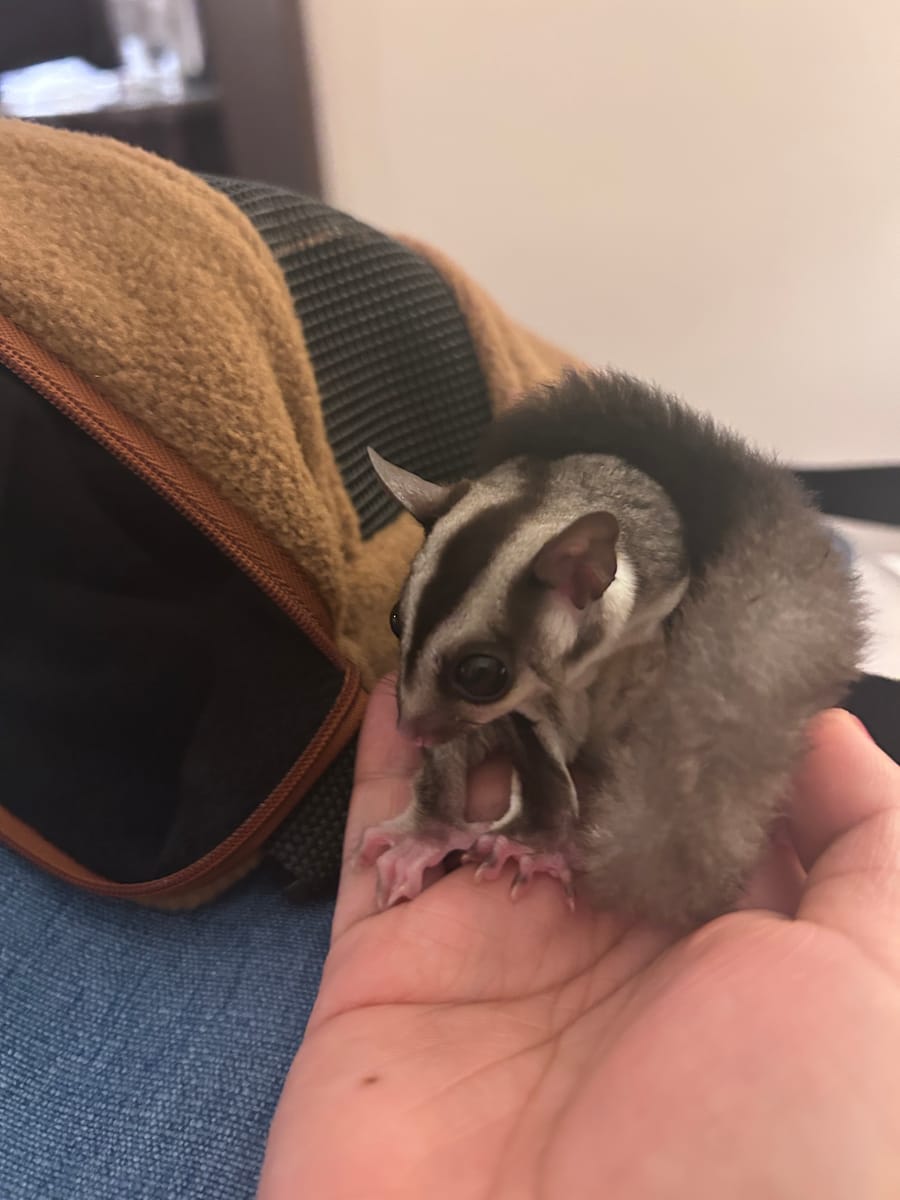
Bonding With Your Sugar Glider
The difference between a sugar glider that rides in your pocket all evening and one that crabs at your hand every time it opens is not the animal. It is the bond. Understanding sugar glider behavior, and how trust is actually built, is what turns a nervous new joey into the companion people fall in love with. The good news is that bonding is mostly patience and consistency, not skill. The better news is that a hand-raised joey has done most of the work before it reaches you.
Why a hand-raised joey changes everything
Bonding starts long before handover. A joey handled daily from out-of-pouch grows up with people as a normal, safe part of its world. By the time it comes home, it is not learning to trust humans from scratch. It is simply transferring that trust to you. This is the entire reason hand-raising matters and the reason an unhandled, cheaper glider so often disappoints. You can bond with an unhandled adult, but you are starting from fear instead of familiarity, and it can take months.
We raise our joeys the first way so your bonding starts from a head start, not a deficit.
What crabbing means, and what it does not
The first time your glider crabs, a rapid chattering, hissing sound, it is easy to read it as anger or aggression. It is closer to a flinch. Crabbing is a defensive noise a startled or unsure glider makes, the equivalent of a person gasping when surprised. It is not a sign the animal hates you, and it is not a reason to back off entirely. It is a sign to slow down and be predictable.
The mistake new owners make is reacting to crabbing by leaving the glider alone, which teaches the animal that crabbing makes the scary thing go away. Instead, stay calm, keep your movements gentle, and let the glider learn that nothing bad follows the sound. The crabbing fades as trust grows.
The first weeks: how trust is built
Bonding is built through scent, voice, and unhurried contact. A practical approach for the early weeks:
- Carry the glider on you. A bonding pouch worn against your chest lets the glider sleep on your warmth and learn your scent and heartbeat during the day. This is the most powerful bonding tool there is, and it costs nothing but time.
- Talk to it. Your voice becomes part of the safe pattern. Quiet, consistent talking during handling helps the animal settle.
- Use scent. A small piece of worn fabric in the sleeping pouch carries your smell into the glider’s safe space, so you are familiar even when you are not there.
- Offer treats from your hand. Once the glider is calm enough, a favourite food taken from your fingers builds positive association fast. Hand-feeding is bonding you can measure.
- Keep sessions to the glider’s schedule. Bonding happens in the evening, when the animal is naturally awake. Dragging a glider out at noon works against you.
Consistency beats intensity. Fifteen unhurried minutes every evening builds more trust than an hour once a week.
The other sounds, decoded
Beyond crabbing, gliders have a small vocabulary worth knowing. Barking, a surprisingly dog-like sound, is usually a call for attention or a response to something it has noticed. A soft purring chatter, often heard when a glider is content and close to you, is the sound owners spend ages trying to describe and never forget once they hear it. Hissing and the loud crabbing sit at the alarmed end. Learning the difference turns the animal from unpredictable to readable.
Why companionship supports behaviour
A glider that is lonely behaves worse, not better. Boredom and isolation show up as overgrooming, restlessness, and difficulty settling. This is why we so often recommend a bonded pair: two gliders keep each other company through the long hours you are asleep or out, and a socially content animal is an easier, calmer one to bond with, not a competitor for your attention. A pair will still bond to you. They will simply be steadier while doing it.
Frequently asked questions
How long does it take to bond with a sugar glider? With a hand-raised joey, often days to a couple of weeks. With an unhandled adult, it can take months. Consistency in the early evenings is the key.
Why does my sugar glider crab at me? Crabbing is a startled, defensive sound, not aggression. Stay calm and predictable, and it fades as the glider learns you are safe.
What is the best way to bond with a sugar glider? Carry it in a bonding pouch against your chest so it learns your scent and warmth, talk to it gently, and hand-feed treats in the evening.
Will a bonded pair still bond to me? Yes. A pair keeps each other company and is usually calmer and easier to bond with than a lonely single glider.
Ready to start the bond?
The best bond begins with a joey that already trusts people. See who is available.
Call to Reserve → +63 945 995 0591 Call or text to reserve. From ₱13,000, DENR papers included. In-person delivery available.