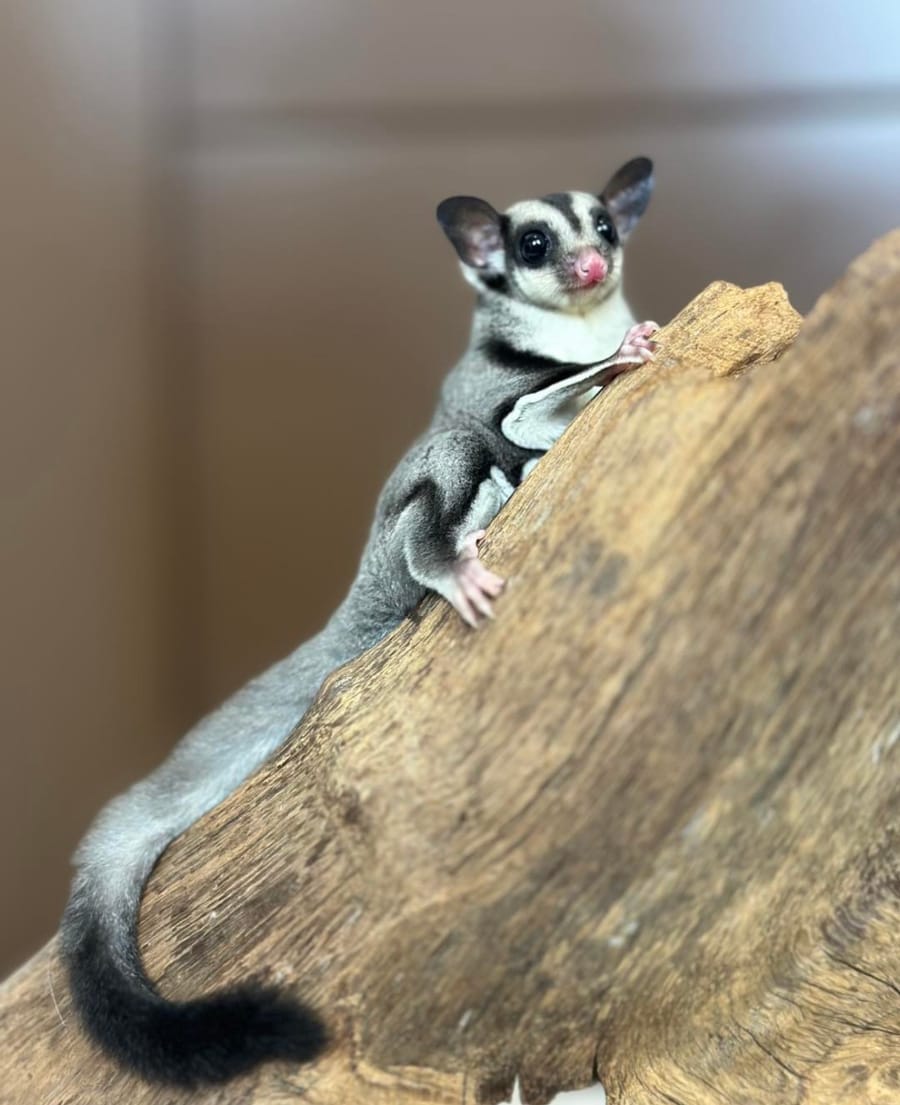
Sugar Glider Lifespan, Health, and Smell, Honestly
This is the page where we answer the questions people are slightly embarrassed to ask out loud. How long will it really live? Does it smell? Can it give me rabies? These are fair questions, and a seller who dodges them is a seller hiding something. The sugar glider lifespan is long, the smell is real but manageable, and the rabies fear is largely misplaced. Here is the honest detail on each.
How long sugar gliders live
A well-kept sugar glider lives ten to fifteen years. That is a long time for a small animal, and it is the most important figure on this site, because it reframes everything else. You are not buying a pet for a few seasons. You are committing to an animal that may outlast a car, a phone contract many times over, and possibly a home move or two.
Lifespan is mostly within your control. The gliders that fall short of that range almost always do so because of diet, which we cover in full in the diet guide, or because they were kept alone and stressed. A glider on poor husbandry often lives only five to eight years, less than half its potential. Feed correctly, keep them socially content in a bonded pair, and a decade-plus is the realistic expectation, not a lucky outcome.
Do sugar gliders smell? The honest answer
Yes, sugar gliders have an odour, and anyone who tells you otherwise is selling. The animal itself is clean and grooms constantly, but it has scent glands and it marks its territory, and intact males are the most noticeable. There is a musky smell that comes with keeping one.
The honest framing is that the smell is manageable, not absent. The things that control it are within your reach: a clean, balanced diet keeps the odour milder, regular cage and pouch cleaning keeps it from building, and intact males are stronger-smelling than neutered ones. Owners who stay on top of cleaning rarely find it a problem. Owners who let the cage go will. If you are sensitive to animal smells and unwilling to clean on a schedule, factor that in honestly before you commit.
Do sugar gliders carry rabies?
This is one of the most searched fears, and the reassuring answer is that the risk is extremely low. Sugar gliders are not a known rabies reservoir the way some wild mammals are, and a captive-bred glider that has never been exposed to a rabid animal is not a realistic rabies concern. The fear largely comes from people assuming a glider is a rodent or a wild-caught animal, and it is neither when it comes from a proper breeder.
What can happen, with any animal that has teeth, is a bite when it is frightened. A startled or poorly bonded glider may nip. That is a bonding and handling issue, covered in the bonding guide, not a disease one. Keep a glider well-socialised and you will rarely be bitten at all.
The health signs that actually matter
A healthy glider is active in the evening, eats with enthusiasm, moves smoothly, and has clear eyes and clean fur. Learn what normal looks like for your animal so you notice when it changes. The signals worth acting on:
- Hind-leg weakness or dragging. Often a sign of the calcium imbalance that diet prevents. Treat as urgent.
- Loss of appetite or sudden weight change. Gliders are small, so problems escalate fast. Do not wait it out.
- Overgrooming to the point of bare patches. Can signal stress, boredom, or loneliness, especially in a glider kept alone.
- Lethargy in the evening, when they should be active. A glider that stays in its pouch at night is telling you something.
The most useful thing you can do before any of this arises is to find an exotic vet who treats gliders, while everything is fine. In much of the Philippines, exotic vets are not on every corner, and the worst time to start searching is in the middle of an emergency.
Frequently asked questions
How long do sugar gliders live? Ten to fifteen years with good care. Diet and companionship are the biggest factors in reaching the top of that range.
Do sugar gliders smell bad? They have a musky odour, strongest in intact males. It is manageable with a clean diet, regular cage cleaning, and neutering where appropriate.
Do sugar gliders carry rabies? The risk is extremely low. A captive-bred glider from a proper breeder is not a realistic rabies concern. Bites, when they happen, are a bonding issue.
What are the signs of an unhealthy sugar glider? Hind-leg weakness, loss of appetite, sudden weight change, overgrooming, or evening lethargy. Any of these warrants an exotic vet.
Ready to keep one well?
A glider’s long life is mostly in your hands. If you are ready for the commitment, see who is available.
Call to Reserve → +63 945 995 0591 Call or text to reserve. From ₱13,000, DENR papers included. In-person delivery available.